Showing posts with label Meghan Falcone. Show all posts

Friday, March 8, 2013

stars, sex and nudity buzz : 03/09/2013

Mark Hudis Steps Down As ‘True Blood’ Showrunner, Brian Buckner Replaces Him


Mark Hudis’ tenure as True Blood showrunner was a short one. Hudis, who succeeded True Blood creator Alan Ball at the helm of the HBO vampire drama at the beginning of Season 6, is stepping down, with co-executive producer Brian Buckner taking over as new showrunner. Hudis was a somewhat surprising choice when he was named Ball’s successor as he only joined True Blood in Season 4. Meanwhile, Buckner, who had been considered a leading candidate for the job, had been with the show since after the pilot. Rumors about a potential showrunner change on True Blood started circulating early this year, though such a move is very rarely made while a series is in production as it indicates urgency; showrunner changeovers usually happen between seasons. True Blood is still early in production of Season 6, with episode 4 currently filming, so the “righting of the ship” is being done with most of the episodes yet to be filmed. Hudis’ appointment as True Blood showrunner was part of an overall deal he signed with HBO last spring. He will now “focus on development under his overall deal,” the network said.

* someone didn't get along with the stars of the show? It's basically Stephen Moyer stepping up and trying to get series back on track.

+++++++++++++++++++++++++++++++++++++++ 


Mandy Moore Exits ABC Pilot ‘Pulling’


EXCLUSIVE: Mandy Moore is leaving ABC’s single-camera comedy pilot Pulling. The project, written by Lee Eisenberg and Gene Stupnitsky and directed by Jason Moore, revolves around three dysfunctional women in their 30s living their lives the way they want, even if society tells them they should have it all figured out by this point. Moore was to play one of them, Louise, who is optimistic and desperate to snag a husband. Moore was the first actor cast in a major role on the pilot, based on the praised 2006 British series. June Diane Raphael was cast as the lead and supporting actors were added. Word is those castings changed the dynamic, and Moore’s character evolved, leading to Moore’s exit. “Mandy is a pro, and has been very patient and accommodating with us,” Pulling producers said. “As we moved closer to production, it was clear we needed to go in a different direction for the character, and Mandy agreed to do what was best for the show. She’s an immensely gifted actress and we hope to have the pleasure of working with her again.” 
Indeed, ABC has been very high on Moore. The network produced a comedy pilot starring the actress last season and earlier this season bought a Rich Appel comedy project she was attached to with a put pilot commitment. “Many things change quickly as a pilot moves into production,” Moore said. “And in this case, Lee and Gene moved the character in a different direction, it was clear this wasn’t right for me. Rather than jeopardize the show, I asked to step aside. They and ABC were very accommodating, and wish them all the best in the fall. It’s a terrific show that worked so well in the UK, I hope it gets the audience it deserves here.”

* the understanding was Mandy will be 'co-lead' and not playing second fiddle (or 'foil' is a more agreeable term) to Raphael. Nudity dodger Mandy has not lose that syrupy sweetness to her persona despite staring at big 3-0 next year. She should (but unlikely to happen) try her luck on cable. Pitch her own show. 

+++++++++++++++++++++++++++++++++++++++


This work is the focus of human anatomy, the use of nudity contained in this piece is film art not pornography nor any other provocative medium. The following images are honest reflections of the material and physical structure of human organisms. We are all of two types of human, male vs. female, these are our bodies.
David Swanson - Director
Brad Holland - Director of Photography

Model - Abbey Lee Kershaw


+++++++++++++++++++++++++++++++++++++++ 


The SXSW Springboard: Indiewire Picks 10 Actors to Watch Out For in Austin

Lena Dunham, Tom Cullen, Dree Hemingway and Julia Garner all came to Austin as relative unknowns and emerged as sought-after talents. With the 2013 edition of the SXSW Film Festival launching today, the springboard is loaded. Here's Indiewire's picks for the 10 actors to watch this year:

Trieste Kelly Dunn, "Loves Her Gun"

Best known for her work in the SXSW indie smash "Cold Weather,” which landed her on Filmmaker Magazine’s 25 new faces of independent list, Trieste Kelly Dunn is rumored to give an impressive lead turn in the hot-button drama "Loves Her Gun." The topical film from Goeff Marslett (known for the animated "Mars," which screened at SXSW in 2010, centers on a woman (Dunn) who flees New York after being attacked and finds herself in Austin where she becomes deeply embedded in Texas' gun culture. Dunn can currently be seen as a series regular in the new Alan Ball produced series "Banshee" for Cinemax.

 (probable Nudity in the future: 90%)

Kaitlyn Dever, "Short Term 12"16-years old actress Kaitlyn Dever has been working steadily for the bulk of her teen years appearing in everything from "Modern Family" to Clint Eastwood's "J. Edgar," but this year sees the sixteen-year-old break out in a bigger way that ever with turns in two buzzed-about indies, "The Spectacular Now" (which earned raves and won an award at Sundance) and "Short Term 12" (which makes its debut at SXSW). In "Short Term 12" she's afforded her meatiest role yet as Jayden, a severely troubled teenager living in a group home for troubled youths, run by Brie Larson's character Grace. (probable Nudity in the future: 80%. She is a child star technically.)

Will Brittain, "A Teacher"

"A Teacher," Hannah Fidell's acclaimed feature directorial debut, already made waves at Sundance earlier this year in the festival's NEXT section, culminating in a coveted Oscilloscope Laboratories buy. Although the film's SXSW bow won't mark its world premiere, it will mark a homecoming of sorts for one of it's principal players (and Austin boy) Will Brittain. In the sexy drama, Brittain stars alongside Lindsay Burdge as a teenager engaged in an affair with his teacher (Burdge). Good looking, incredibly charismatic and clearly undaunted by risky choices, Brittain should go far.

Jake Hoffman, "Snap"

Yes, that last name is no coincidence. Jake Hoffman, who leads "Snap," a psychological thriller making its world premiere in Austin, is the son of Dustin Hoffman. He's been acting for most of life appearing alongside in his father in everything from "Hook" to "Rain Man," and then stepping out on his own to play Adam Sandler's son in "Click" and appear in TV shows like "Californication" and "Luck" (which starred...his father). The NYU Film School grad is afforded his first lead role in "Snap" and the part's a juicy one -- in it, he plays a mentally unstable dubstep savant who becomes obsessed with social worker Nikki Reed ("Twilight") and quickly unravels to menacing proportions. He can next be seen in Martin Scorsese’s anticipated "The Wolf of Wall Street," opposite Leonardo DiCaprio.


Francisco Barreiro, "Loves Her Gun"

Best known for delivering a standout performance in Jorge Michel Grau’s cannibal horror film “We Are What We Are” (which has since been remade in America), Mexican actor Francisco Barreriro is widely regarded as one of the brightest up and comers in Mexican cinema. He was last seen in “Penumbra” director Adrian Garcia’s Spanish language horror picture “Here Comes the Devil.” At SXSW, audiences will have a chance to see him in his first high profile English language project, “Loves Her Gun.” The topical film centers on a woman (Trieste Kelly Dunn, who also made the cut) who flees New York after being attacked and finds herself in Austin where she becomes deeply embedded in Texas' gun culture.

Nora Tschirner, "Everyone's Going to Die"

German TV and film star Nora Tschirner is a household name in her native country having won a Bambi award and voiced the raved haired Merida in the German dubbed version of Pixars’ Academy Award winner “Brave,” but she has yet to break into the English language market. The British indie “Everyone’s Going to Die” marks her first project that could change that tide. Making its world premiere at the festival, the film stars Tschirner as a woman stuck in a rut in a seaside town. Her luck changes when a man reenters her life with an interesting proposal.

Jane Levy, "Evil Dead"
TV star Jane Levy (ABC’s “Suburgatory”) makes the leap from the small screen to the big in the hugely anticipated opening night horror film “Evil Dead.” And if the gruesome red band trailer for the remake of Sam Raimi’s cult classic is anything to go by, Levy goes for broke in the film as a recovering heroin addict who becomes possessed by some nasty spirits after retreating to a cabin in the woods with some friends. Next up for the hopeful scream queen is “In a Dark Place,” another spooky tale. Helmed by Bharat Nalluri (“Miss Pettigrew Lives for a Day”), the thriller stars Levy as an American woman who ventures to England to serve as the governess to a porcelain doll that may be haunted. (probable Nudity in the future: 95%. Optioned out of Shameless for varied reasons. She was too young to show tits is one and her agent felt she is a movie star material - snaring the lead role Evil Dead is testament to her tenacity to be the next big thing. Nudity is not a 'if' but 'when')

Stanley 'Doe' Hunt, "Licks"

California native Stanley ‘Doe’ Hunt has been acting in his mother’s theater company (Lower Bottom Playaz) since childhood and now as a young man is set to breakout at SXSW in his first film project “Licks.” First-time filmmaker Jonathan Singer-Vine told Indiewire that Hunt wowed at his audition, showcasing “raw talent,” and got the lead role in “Licks” on the spot. The film follows the story of a young man, D (Hunt), as he returns to his Oakland neighborhood after serving two years in prison for a robbery gone wrong. Tested by the bad influences around him, D is forced to decide which direction to take his life.

Ashley Bell, "The Bounceback"

Ashley Bell has already earned herself an Independent Spirit Award Nomination for her terrifying performance in “The Last Exorcism” a possessed young woman. But despite that found-footage hit and its recent sequel, she’s far from being a regular fixture on the indie circuit. That could change with her touted lead turn in the buzzed about romantic comedy “The Bounceback,” directed by fellow Spirit Award nominee Bryan Poser (“Lovers of Hate”). In it, she plays Cathy, an ex stalked by Stan (“Cloverfield” star Michael Stahl-David) after he pops up in her hometown of Austin for two weeks unexpectedly. Meanwhile, Stan’s best bud’s roommates are determined to win an air-sex competition. (probable Nudity in the future: 80%. Ashley is a smart girl. Her looks are unique to say the least. In danger of being typecast, she is trying to separate from horror genre and will go soon for a nip and tuck on her face. No one thinks she will bare her breasts in near future but there is something impish about Ashley that tickles my hairy balls. Could surprise with an appearance on a cable show.)


PJ Boudousqué, "Coldwater"

“Bellflower” producer Vincent Grashaw makes his directorial debut with “Coldwater” and he’s rumored to have a startling new talent at its center. Before landing the lead in Grashaw’s film as a newbie at a harsh reform facility, newcomer PJ Boudousqué had lived in New Orelans and then LA, after he and his family were evacuated from their home during Hurricane Katrina. Grashaw told Indiewire “something in our gut told us this kid was special, so we literally cast him off of one audition of two scenes. An unproven, unknown, without a resume.” That could change should the film breakout in the way “Bellflower” did two years ago at Sundance.

+++++++++++++++++++++++++++++++++++++++

20-years old American model Ebonee Davis boobsters show
* finally after months of boring nonsense on his blog, Terry Richardson got a hot chick naked in his studio. Wonder if he cummed on those heavenly tits?
imagebam.com imagebam.com imagebam.com imagebam.com imagebam.com imagebam.com imagebam.com imagebam.com imagebam.com imagebam.com imagebam.com imagebam.com imagebam.com
More of the babe here and here and here and here and here.

+++++++++++++++++++++++++++++++++++++++ 

Caitlin Stasey in US pilot Reign for the CBS network

By David Knox on March 9, 2013
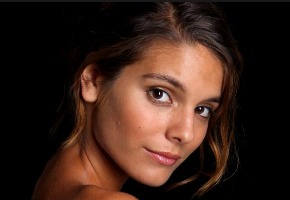
Caitlin Stasey (Neighbours, Please Like Me) has been cast in US pilot Reign for the CBS network.
2013-03-08_1556
Reign chronicles the rise to power of Mary Queen of Scots when she arrives in France as a 15-year-old, betrothed to Prince Francis.

Former Neighbours actress Adelaide Kane has already been cast as the young queen.

Stasey now joins her former co-star as lady-in-waiting Kenna, the vibrant and sexy daughter of an Earl who is a free spirit looking for love.

Last month Eliza Taylor, who played Janae Timmins on Neighbours, won the lead role in The CW’s pilot The Hundred as a young rebel who is part of a 100-strong crew sent back to Earth to rebuild the human race.

* Aussie starlets are carving a piece of Hollywood for themselves without resorting to nudity. YET. When the shows go under and probably will in first season itself, the likes of Caitlin Stasey and Adelaide Kane will sooner or later bring out the puppies. Stasey is showing all the signs of being a nudity dodger. Her resistance is admirable but futile if you combine long term prospect with negligible talent.

+++++++++++++++++++++++++++++++++++++++


Danielle Fishel Maxim photoshoot pics


High-school-aged Topanga would certainly disapprove. Danielle Fishel, who played Topanga on Boy Meets World and will be reprising the role on the upcoming Girl Meets World Disney Channel reboot, has posed for Maxim.
While the pictures are pretty NSFW, the accompanying Q-and-A is fairly PG. She talks about the origin of the name Topanga: "Michael Jacobs says he was driving down the highway when production called and said, 'We need a name for this character!'" she explained. "He happened to be driving past Topanga Canyon, so he said, 'Topanga.' He says that if they had called him two miles later, I would've been named Canoga, which is the next exit."
Most interesting may be that she shoots down the rumor that she and Ben Savage ever dated. "No! That rumor was entirely my fault because I once said, on The Tyra Banks Show, that Ben and I went on a date, and that turned into 'Danielle and Ben dated,'" she told the magazine. "We went on one date, when I was about 15, and by the time the dinner was over we realized mutually that we were more like family than lovers."
Unfortunately, she doesn't discuss her actual relationships during the Boy Meets World years. (Paging Lance Bass!) But she did spill about Topanga-approved topics such as her fiancé and recently graduating from college. The most shocking revelation may be what she cops to doing during her free time: "I'm huge into '90s rap," she said. "It's my jam. My all-time favorite album is Snoop Dogg's Doggy­style. And if you ever really want to see me embarrass my­self, put on some Notorious B.I.G. and watch me grab my crotch and mouth all the words. It's really embarrassing, but I can't help myself."

‘Boy Meets World’ Spinoff Will Be In Disney Channel Upfront Presentation Despite Racy Danielle Fishel Magazine Cover

Boy Meets World star Danielle Fishel raised a few eyebrows with her racy spread in Maxim magazine, which has given celebrity blogosphere fodder for the past couple of days. But the timing of the story — just a few days before Disney Channel‘s upfront presentation next Tuesday, also reverberated to the higher-ups at Disney. Fishel and her Boy Meets World co-star Ben Savage topline Disney Channel’s spinoff pilot, now in production, which somewhat surprisingly has sparked a ton of interest from fans — thus Fishel’s Maxim interview. But the racy photos and some information she shared in the interview, including a cocaine reference, which I hear came as a surprise to Disney executive and Boy Meets World creator Michael Jacobs, triggered rampant speculation that unhappy Disney Channel brass, led by topper Gary Marsh, would be yanking the hot project from the upfront presentation where it was to be a major piece. But while the Maxim cover may not have been the best way to re-introduce the family-friendly franchise to a new generation, the spinoff is not being banished from Disney Channel’s upfront presentation, a network spokesperson said. “While the project is a pilot, and hasn’t yet filmed, it will then be put through focus group testing so we won’t know if it will be a series for months to come — however, because we are excited about it, we are taking the unusual step of including it during Disney Media’s presentation to advertisers. Gary Marsh will make that presentation.”

* Danielle career never really took off after Boy Meets World ended. Not for lack of trying on her part. It's her personal life that unfortunately derailed Danielle off-course for a long long time. Appearances on Dorm Daze crap-edy movies made it worse and she wasn't even naked in it! I'll be crossing my fingers for her and revamped BMW to do magic in ratings. Just keep a safe distance away from Ben Savage, Danielle. That dude can sense vulnerability from miles away.


+++++++++++++++++++++++++++++++++++++++


Girl Talk: Confessions Of A Nude Model

The flash went off with a “pop” and the photographer patiently told me to loosen up. My hands were sweaty and my heart was beating a mile a minute. Trying my best to concentrate, I twisted into an elegant pose and took a deep breath to soften my expression. The resulting photograph was beautiful but the experience was terrifying.

I was 20-years-old when I first took my clothes off for money. While it might seem sordid, it wasn’t as bad as you might expect. A sophomore in college in New York, I was completely broke and my babysitting job wasn’t going to pay my rent for the summer while I interned. An old acquaintance — I’ll call her Tania — had been posting censored nude photos of herself on Facebook, and out of sheer curiosity I wrote her a message about it. She quickly replied and said that she had been making extra money “art modeling” for photographers. I was intrigued.

After hours of preparing for my first real photoshoot, I found myself naked in front of a photographer’s camera. Tania patiently stood at the side and watched, as if she were a mother watching her daughter on stage. From time to time she’d offer me tips, such as keeping my mouth slightly open and always standing on my toes in full-body shots (it elongates the legs).

As a serious student from a suburban upbringing, I had never expected to become a nude model. With Tania’s guidance, however, I learned the tricks of the trade within a few weeks.

The Web site the majority of freelance nude models use to find work is called ModelMayhem. After a few shoots were under my belt, I created a profile and portfolio of my images. Tania also taught me the importance of picking the perfect model pseudonym, the goal being to build a name for myself within the world of nude photography. Armed with my ModelMayhem page, I began to network with potential clients with cash to spare.

The sad truth is that most of the photographers who I worked with were usually men with lucrative jobs who were willing to heavily invest in their “new photography hobby.” Their photos were unfailingly amateur and cheesy, but they were always the ones willing to pay my $150 flat rate for three hours of shooting. During those shoots I always felt like a piece of meat: they most likely booked me just to spend time with a naked girl. Don’t misunderstand, not all of the photographers operated like this; some were very talented and I was deeply honored to work with them. But the large majority of them were creeps.  

(* proud to admit she's referring to guys like me) 

Despite this, I didn’t stop. The money was too good. After a while I raised my rate to $100/hour. Between interning, writing papers, and extra-curricular activities, I believed that I had no other choice if I wanted to be financially secure.

I reached the height of my nude modeling career when I began my senior year of college. Having made a name for myself within the ModelMayhem community, I’d spend up to five hours a day networking on the site. I averaged two to three photo shoots a week and was bringing in around $2000 a month. For a college student, that’s quite a lot of money.

I began to regard my body as a money-making tool. I meticulously paid attention to what I ate and constantly exercised so that cellulite on my ass wouldn’t show up under harsh lighting. I purposely kept my hair long and never, ever shaved off my pubic hair. Most people don’t believe me when I say this, but a nude art model getting a Brazilian bikini wax is career suicide. It wasn’t just how I felt about my body that started to chafe; nude modeling began to feel violating. There was the hobbyist photographer in New Jersey who —unbeknownst to me —zoomed in on my crotch during our entire shoot. There was the nude photography workshop where I was pressured into spreading my legs (something I always said I’d never do) for an erotic shot. There were the photographers who wanted to pay me for sex. There were the old men who just needed somebody to listen to them. There were the numerous photographers I did have sex with.

My last photo shoot was in August 2011 in a hotel room in New York City. The money was good and the photographer was nice. A few months later I was hired at my current job and haven’t modeled since.

Looking back on everything, I don’t regret being a nude model but I do regret many of the things I did. Today, it’s strange to think that I once posed my naked body before photographers’ lenses as a living. I have a box hidden under my bed where I keep prints and Polaroids given to me by various photographers. Sometimes — but not too often — I open it and gently leaf through each photo.

With her small breasts, tuft of black pubic hair, and blue eyes, the naked girl looking back at me seems naïve yet slightly precocious. In her, somewhere, it’s me.

I smile back and return her to the box, slowly placing the lid on top.


The author of this essay would like to be anonymous. If you want to contact her, email Jessica@TheFrisky.com and your message will be forwarded.

+++++++++++++++++++++++++++++++++++++++

Albedo: un court métrage de C. Lucidi/ a short film by C.Lucidi (français/ english subtitles)

from
An apartment. A couple. Two languages. A disease. Darkness. Light.
Directed and edited by Christian Lucidi.
Produced by Carlo Maria Oddo, Gino Saladini, C.Lucidi.
Written by G. Saladini, C. Lucidi.
With: Anael Snoek, Franck Provvedi, Isabelle Seleskovitch, Gennaro Parisi, Carlo Maria Oddo, Christian Lucidi
The Video is here

+++++++++++++++++++++++++++++++++++++++

Nerdist Podcast: Camilla Luddington

The wonderful Camilla Luddington sits down with Chris and Matt to talk about how British names sound fancier than American names, crazy TV show ideas, and how she is the new Lara Croft in Tomb Raider!
The Link or Direct Download

+++++++++++++++++++++++++++++++++++++++


Netflix Series Spending Revealed


Netflix Series Spending Revealed

Streaming service's production costs exceed typical TV fare

Andrew Wallenstein

Netflix may be notoriously secretive about the economics of its original programming, but not everyone who works with the streaming service works quite the same way.

CAA TV literary agent Peter Micelli was forthcoming about how Netflix — and other digital media upstarts — do business with Hollywood during a panel discussion Friday at the UCLA Entertainment Symposium. He went so far as to specify how much was spent to produce some of the series CAA has sold to Netflix.

“The cheapest show is $3.8 million an episode,” Micelli told a crowd of more than 500 lawyers in the entertainment business. “‘House of Cards’ started at $4.5 million and (executive producer David) Fincher took it way above that.”

Micelli ventured further into the Netflix programming pipeline, referencing dollar figures for the upcoming Eli Roth horror series “Hemlock Grove” and the Jenji Kohan comedic drama “Orange is the New Black.”
“The next series is ‘Hemlock Grove’ and they’re doing that for about $4 million an episode,” he said. “‘ ‘Orange is the New Black’ is just under $4 million as well. They’re huge budgets shows. doing things in a huge way.”

Micelli noted that Netflix was spending even more than broadcast networks were doling out for hourlong series, which rarely exceeds $4 million per episode. He provided insight on the deals, which are structured to cover multiple regions around the world.

“They’ll pay a large percentage of the budget for it,” he divulged. “They control it for four years exclusively and then you can turn around to re-sell to a linear cable channel.”

But Micelli noted that Netflix may get some competition soon for high-end programming buys from Microsoft.

“But right behind them is XBox and Nancy Tellem,” he said, citing the tech giant’s hire of the CBS veteran last year. “She’s going in looking at it in a similar way to Netflix.”

Micelli also dished on Amazon Studios, the programming arm that is avoiding Netflix’s focus on dramas so far but developing multiple projects outside the genre. “Amazon is looking at it on a smaller scale, with comedies, but spending a million dollars per episode,” he said.

Netflix et al could be followed by still more digital content buyers, including Redbox and Verizon, who he indicated came in inquiring about programming opportunities — a fact the companies have yet to reveal about their upcoming joint venture, Redbox Instant By Verizon.

“Almost every month someone comes in to get into high-end scripted programming,” said Micelli. “It’s an unbelievable thing to see.”

Micelli returned again and again to the notion that the broadcast networks were doing themselves a disservice by diverting tens of millions of dollars into promotion that would otherwise go into the programming. He believes Netflix’s focus on Big Data to guide viewers to content is a big advantage.

“They’re also not spendng $40 million a show on a marketing campaign,” said Micelli. “They have a guy in a room who writes an algorithm.”

Micelli also said Netflix’s focus on serialized programming was the opposite of broadcast TV, where one of his clients, “Lost” executive producer Damon Lindelof, would get grief from ABC about changing the show’s complex storylines be more inclusive of viewers each episode. “They would grind him,” he said. “That’s all gone now.”

Micelli also forecast that a fundamental shift was coming to basic cable that would create demand for even more original programming. “You’re also going to see TNT and USA will not buy the reruns like they once did,” he predicted. “They’re not getting the value. Original content will become more and more the norm at all of these places.”

Micelli even revealed that Netflix’s motivation to be so secretive is rooted in something one of its competitors discovered the hard way. He explained that HBO came to regret its decision to release ratings information when “The Sopranos” emerged as a big hit, only to see much of the programming that came afterward pale by comparison in terms of audience.

“Netflix learned from that and they’re not going to do it,” he said.

+++++++++++++++++++++++++++++++++++++++


* nothing to do with the blog theme but dayum...awesome teaser.

Extended Red Band Clip From Olympus Has Fallen

FilmDistrict has revealed an extended Red Band clip from Olympus Has Fallen which shows the attack on the White House.

Hitting theaters on March 22, the Antoine Fuqua-directed action thriller stars Gerard Butler, Aaron Eckhart, Morgan Freeman, Angela Bassett, Dylan McDermott, Ashley Judd, Melissa Leo and Rick Yune.

When the White House (Secret Service Code: "Olympus") is captured by a terrorist mastermind and the President is kidnapped, disgraced former Presidential guard Mike Banning finds himself trapped within the building. As our national security team scrambles to respond, they are forced to rely on Banning's inside knowledge to help retake the White House, save the President, and avert an even bigger disaster. 

+++++++++++++++++++++++++++++++++++++++


MPAA Chief Chris Dodd Dodges Anne Hathaway-vs.-Jennifer Lawrence Debate

The major studios' rep didn't get drawn into the Oscar fray during a visit to Ottawa, but he addressed the issue of movie piracy seriously.

Chris Dodd MPAA P 2012OTTAWA -- There was no ensnaring MPAA chairman Chris Dodd in Canada's Anne Hathaway-vs.-Jennifer Lawrence debate during a visit this week.

“I’m so glad I came for that first question,” the former U.S. senator said when asked during an keynote interview why Canadian viewers of the recent Oscar telecast hated Hathaway and loved Lawrence as both picked up major Academy Awards.

“They both obviously did a terrific job with their movies, but I’m not getting in the middle,” Dodd declared. “But I thought Bradley Cooper was rather good. How’s that for ducking your question?”

Dodd then got serious in addressing the issue of movie and TV piracy, which in the past has landed Canada in hot water with the U.S. government over copyright policies only recently revamped for the digital age.
Dodd took aim at those who call piracy a victimless crime.

“Tell that to the 130,000 people in [Canada] who get up every morning and go to work in the film and TV industry,” he said.

At the same time, Dodd said the major studios were less heavy-handed and prone to lawsuits than in the past while progress was made on the file.

“We’re getting some positive results,” he told his Canadian audience, noting that Google recently introduced a new anti-piracy algorithm and ad brokers guarded against their content appearing on illegal sites.

Dodd also pointed to the increasing use of copyright removal notices to dissuade people from consuming illegal content as more “educational” and less punitive.

The MPAA chief said the major studios were looking to see whether current efforts would pay off before throwing their weight around.

“To me, it probably makes sense to go that way -- looking for cooperation rather than getting into some huge battle on the floors of Parliament or Congress,” he argued.

The Prime Time conference, organized by the Canadian Media Production Association, wraps Friday.

+++++++++++++++++++++++++++++++++++++++


from sosyalmedyaturkiye

Ellen Hollman in Spartacus War of the Damned


Gwendoline Taylor and Ellen Hollman


Spartacus - Gaia and Lucretia


+++++++++++++++++++++++++++++++++++++++


Hannity, O’Reilly, Arpaio – Republicans fall in line with racist overtones

Racism from rank and file neoconservatives

Added by James Turnage

Hannity, O'Reilly, Arpaio
If you think the civil rights movement of the 60’s and 70’s resulted in a lessening of racism in the United States, you are entirely incorrect. Thanks to an extreme right wing movement in our country, it may be more prevalent today than it was 40 to 50 years ago.

Some so called “neoconservatives celebrities”, though they attempt to hide it, are obvious about their open fear and hatred of African-Americans and Hispanics. When someone such as Rush Limbaugh denigrates virtually everyone but white males, no one is surprised. He’s just being himself.

But when Mitt Romney was being himself, not aware his comments were being recorded, referred to the 47% who didn’t pay taxes, and expected the government to take care of them, who do you think he was talking about? The very poorest groups among us reside in the inner cities. A majority of them are African American. These types of statements represent the growing trend of the Republican National Committee (RNC) to favor candidates and pundits who are neoconservatives.

When “W” displayed his views of individuals who were not Christian by saying “they’re not like us”, he made it clear that he was prejudiced.

When Sean Hannity, right wing Republican supporter, and self-proclaimed journalist, attacked Representative Keith Ellison (D-Minn.) because he rightfully called Hannity “the worst excuse for a journalist I’ve ever seen”, Hannity revealed his true self a few days later.

On his program, Hannity linked Ellison to Nation of Islam leader Louis Farrakhan and the late-Black Militant leader Khalid Muhammed.

“The reality is, the Congressman not only associated with these radicals – but he spent years spewing their hateful rhetoric,” Hannity said, referring to when Ellison was a law student at the University of Minnesota in the late 1980s and early 1990s.

Hannity continued: “What is the difference, I mean, do we have somebody then in Congress that is the equivalent of one side of what the Klan is? Because I view the rabid ranting of Khalid Mohammed as frightening in terms of racism, anti-Semitism.”

Bill O’Reilly, also a FOX pundit slipped and gave his views on minorities with obvious racist overtones. In addition to making a ridiculous and sweeping statement about Asian people, O’Reilly also seems to imply that there are cultures that are lazy and careless. Since this clip surfaced, several statements have been made by Hawaiian officials speaking out against O’Reilly and his remarks.

Joe Arpaio, an Arizona sheriff who has never attempted to hide his contempt for Hispanics talked about the release of thousands due to the Sequester.

“There’s something called amnesty, this is just another pathway to that when you kick these people lose. And when you say, ‘We’re going to have these people report back to a court’ — do you think they’re going to come back? No. They’re heading south or to another state,” he said. “How are they going to keep track of all the people they kicked out on the street? They can’t.”

Bottom line, Arpaio said, “If they’re here illegally, they should be deported.”

His “these people” is a classic line used by bigots throughout our country’s history.

Rick Perry, Governor of Texas, was proud of his family’s hunting camp called “Niggerhead”. Perry claimed his family painted over the sign in 1983, but an article by the Washington Post disagreed.

“I remember the first time I went through that pasture and saw that,” said Ronnie Brooks, a retired game warden who began working in the region in 1981 and who said he guided three or four turkey shoots for Rick Perry when Perry was a state legislator between 1985 and 1990. “. . . It kind of offended me, truthfully.”

Recently, half term governor and failed VP candidate Sarah Palin demonstrated her regard for our President when she was interviewed. Using an antiquated term with a racially charged history, Palin accused Obama of doing a “shuck and jive” on the American people regarding what she called “these Benghazi lies”.

Before the November election, the Speaker of the House displayed his fear of minorities: “Boehner Says Out Loud He Hopes Blacks and Latinos ‘Won’t Vote at All This Election.”

I could sit here all night and cite more examples of how racism has increased since 2008 when Mr. Obama was elected. From Mitch McConnell’s statement that Republican’s goal only was to “make Obama a one-term President”, to Arizona governor Jan Brewer, a confirmed racist and bigot, who promised, “those deferred action recipients can’t receive a driver’s license or any other unspecified “public benefit” in her state despite the federal order”, a new national effort to keep minorities from having the same rights as white Americans is emerging.

Now the Supreme Court is in the mix. Scalia and the other four right-wing Justices want to declare the 1965 Voter Rights Act ‘unconstitutional’. With efforts by Republicans to suppress minority voters in the November election, it is needed more than ever.

Moving America backwards would mean a diminishing of the efforts of several of our greatest citizens including Martin Luther King. According to our Constitution, “all men are created equal, and have certain inalienable rights of life, liberty, and the pursuit of happiness.”

I lived in Texas and Mississippi for a short time. The Civil War may have been won by the north, but the deep south still lives. Prejudice and racism are as alive today as they were 200 years ago. My best friend lives in Memphis, Tennessee, where a KKK rally was allowed this weekend. I have a brother-in-law who lives in Georgia, and proudly uses the non-word, “nigger” frequently.

Violence and hatred are growing concerns in America. If the Republican dominated Supreme Court strikes down an historic law that began hope our country was healing from hatred, racism and bigotry, shame on them. Andrew Young, who was part of our government when the VRA was passed says that it “needs to be strengthened, not removed”.

In 1964, I enlisted in the United States Air Force. I was sent to basic training at Lackland Air Force Base in Texas, and then to “Tech” school at Keesler Air Force Base in Mississippi. When the novel and movie were released titled “The Help”, friends of mine asked me if it was really like that. I hesitated, and then said, “it was worse”.

+++++++++++++++++++++++++++++++++++++++

Golden Showers

SKiPPERandMiDGE.com is the sickest website ever to see Meghan Falcone and Jo Newman doing all their mad funny $#!* New Videos EVERY TUESDAY before the Joe Schmo Show on SPIKE TV!


Salad Tossing


+++++++++++++++++++++++++++++++++++++++


Model Lily Cole: I won't judge anyone for doing nude work - I posed for French Playboy and I loved it


Lily Cole has admitted that she loved it when her naked pictures for French Playboy came out in the same week she started university at Cambridge.

The model posed for the provocative shots in 2008 and was pleased that it coincided with the beginning of her studies.

‘I won't judge anyone for doing nude work,' says Lily, 25.

‘The shoot I did for French Playboy came out the first week I was in Cambridge, a coincidence that I kind of loved. I loved the supposed contradiction between having a brain and nude modelling.

‘Stereotypes can be broken and should be broken. The pictures weren't that big a deal for me. They were a bigger deal for the British media - they got an excuse to publish pictures from Playboy.'

Lily went on to achieve a double first in History of Art at the prestigious university whilst still doing modelling and acting work.

‘I don't know how I got a double first,' she tells The Times Magazine.

‘I just worked. I was away a lot because I had several modelling commitments, but when it came down to it, I was focused and that came from being very interested in what I was doing.

‘I have a nerdy side. That's why I played Polly the geek in St Trinian's. I just love learning.'

+++++++++++++++++++++++++++++++++++++++


IMIELSKI PHOTOGRAPHY WITH YANA SAV


+++++++++++++++++++++++++++++++++++++++


Beyond Naked Trailer (2013)

What happens when four first-timers accept a challenge to ride naked in Seattle's legendary Solstice Parade? This feature-length documentary explores our deep-rooted fear and awkward fascination with nakedness through the lens of one of Seattle's most popular traditions.
When can I see it? Visit beyondnakedfilm.com for the latest info.


+++++++++++++++++++++++++++++++++++++++


TeenyB Florida Shoot (Models: Emily, Erica and Aubri)


A short film shot from my photo shoot with TeenyB Bikini Couture shot on location in Florida. The girls looked so amazing I made them goof around on video- hope you enjoy!!! (Music: "Heart Attack" by Raphael Saadiq) Makeup/ Hair: Shelley Giard. joseluisphoto.com / teenyb.com


+++++++++++++++++++++++++++++++++++++++


Sunday, February 3, 2013

stars, sex and nudity buzz : 02/04/2013

Interview: Joanna Vanderham on nudity in Dancing On The Edge and ‘fake drunk acting’

Just three years out of drama school, young Scottish actress Joanna Vanderham is fast 
making a name for herself. The star of ITV’s autumn hit The Paradise is back on our screens 
in a new drama tonight, and, finds Stephen McGinty, she’s determined to do it her way.

WHEN making love on a moving train, it’s not necessary to be nude, at least, that’s what Joanna Vanderham believes. At the end of a long day of rehearsals on the set of Dancing On The Edge, BBC 2’s new drama which begins tonight, the Scots actress realised that she appeared to have agreed with the directions in the script which called for her character, Pamela, a socialite in 1930s London and that of Stanley, a music journalist, to be naked – which wasn’t quite what she had in mind. At the end of the day, the director, Stephen Poliakoff, asked if 
everyone was okay, thinking he was referring to the whole day and not that particular scene. She said yes.

“The way it was written in the script the pair are naked and then there are lines of dialogue for the scene. I read that and it’s in a lot of scripts. You would be surprised how often it is in scripts. It is just casual nudity and everyone knows it’s just casual nudity and isn’t necessarily expected and definite. We were having a rehearsal and Stephen talked about the relationship between Pamela and Stanley the whole day. We read that scene and at the end he said: ‘Are you okay?’

“The next day I said it wasn’t what I meant and it caused a bit of a discussion. It wasn’t a big deal but I put my point of view across and he listened to what I had to say. These images don’t go away. However much for us it may be a tasteful scene, people can take it out of context and it no longer is. I don’t want to be known for that. I want to be known for my performances and the good choices of work and at the moment it would have been a bad move on my part.”

I doubt many young actresses would have the strength of will to talk round a director, especially one as single-minded in pursuit of his vision as Poliakoff, the last remaining auteur in British television drama who, when it comes to budget and episode length, usually gets what he wants. Then again, Vanderham has a persuasive manner and talent to burn. It’s less than three years since she was chosen from drama school in Wales to play the lead role in The Runaways, an adaptation of a Martina Cole crime novel for Sky which also starred fellow Scots Ken Stott and Alan Cumming. Since then she has become a well-known face thanks to her role as Denise Lovett, the feisty Scots shop assistant who dreams of a successful commercial career in The Paradise, BBC 1’s autumn hit which was based on a novel by Emile Zola.

Born and raised in Scone in Perthshire, Joanna’s mother is a doctor and her father, who is Dutch, a successful businessman. As one of four children, she traces her acting ambitions to a need for attention.
“It was always a part of my character I think,” she says speaking on the telephone from London, where she now lives. “When I was growing up my mother made me and my siblings go to after-school clubs and drama club was just one of them that we all had to go to. For me, it was just the one that stuck. I was about nine or ten when I started and I was just a big show-off as a kid. I always wanted attention, being one of four children you are always vying for attention with successful parents.

“That was where it started and when I got to my final year of high school all my friends were applying for university and I printed off the form to get into drama school and asked mum if she would sign it. She did. There was no debate and she came to every audition. Now my dad will say: ‘With Jo, we just always expected her to go to drama school’.”

She said that she messed up her audition to the RSAMD in Glasgow – “I was so bad. I tried to do fake drunk acting” – but was accepted to the Royal Welsh College of Music and Drama in Cardiff where a casting director spotted her potential during a class visit. Three weeks later she was flying to Cape Town in South Africa to film The Runaways where Alan Cumming, who played a transvestite, made a big impression.
“Meeting Alan was a very surreal experience as he was having his make-up test done in the make-up truck and I was giving back a nail polish that I had borrowed. We just hit it off. I had been filming for six weeks before he arrived, as his character comes into the series later on. I was just about knowing what I was doing and it was nice to have someone come along and say don’t take it too seriously, be professional, but this is not the be all and end all. He just had this confidence. He made things look fun.”

Working with Poliakoff was fun, but in a 
different way. The playwright, who is a national institution and successor to dramatists such as Dennis Potter, writes haunting dramas which corkscrew around the themes of memory, loss and the hidden malevolence behind often 
affluent people. He also has an eye for young 
talent, casting Emily Blunt in Gideon’s Daughter and 
Romala Garai in his feature film Glorious 39. While Vanderham was largely un-aware of his work prior to securing the role, she was left in no doubt about the 
importance of it.

“From the start we had a mutual understanding that what he had written and what we were trying to make was, as he said, the best piece of work he had made, so it felt like there was quite a lot of pressure on us, the actors, but at the same time Stephen was always there to give you that boost of confidence. He would take you to the side and say I know you can do this. I was 21 when we filmed it. He gave you that confidence and it was very empowering. It turned out to be fun shoot.”

The drama is about a black jazz band and how they are adopted by high society in London 
during the 1930s. Vanderham plays Pamela, a 
socialite on the fringes of the story but who works towards the centre over the five episodes.
“Pamela comes across as an ignorant socialite and frivolous young woman who doesn’t have a care in the world, but as her story is told you realise that she is shouldering a lot of emotional damage and that is what gives her strength at the end. She is almost the moral compass at the end of the story and that is what made it so fun.”

Hollywood, or at least an indie film shot in Manhattan, has already beckoned for the 
actress. Last summer Vanderham filmed What Maisie Knows with Steven Coogan and Julianne Moore, but for now and until April when the second series of The Paradise starts filming she is “resting”. She laughed: “To be honest I’m waiting for the right thing to come along and making tactful choices. Being brave at being unemployed is what I say.” It is unlikely to be for long.

• Dancing on the Edge is on BBC 2 tonight at 9pm

Heads Up: Dancing On The Edge

What are we talking about? A new BBC drama five-part series, set in the early 1930s, following a black jazz band as they achieve fame and even royal patronage on the society party circuit. Until, that is, a suspected murder becomes the subject of an investigation by a music journalist .…
Elevator pitch Racism, royalty, music, murder – and all that jazz.

Prime movers It's written by Stephen Poliakoff – The Lost Prince; Shooting the Past – and is, rather astonishingly, his first ever serial for the Beeb. He is also directing, with help from co-director Philippa Lowthorpe.
The stars Chiwetel Ejiofor (Children Of Men; The Shadow Line), Matthew Goode (Watchmen) and Janet Montgomery (Entourage), as well as best-of-British thesps, such as Anthony "Giles-from-Buffy" Head, Caroline Quentin and Jane Asher.
The Early Buzz The Daily Mail seems primarily interested in the period costumes: "It's enough to make you want to revisit the 1930s .… Oozing glamour and sophistication, the girls of BBC2 drama Dancing On The Edge have been out in force, donning a variety of gorgeous frocks from the era." The Evening Standard wrote: "A new drama based on the true story of a black British jazz band in Thirties London reveals a little-known side of English society …. Dancing On The Edge by award-winning writer Stephen Poliakoff was inspired by the discovery that black musicians were championed by royalty led by the Prince of Wales — later King Edward VIII — despite the rising tide of racism and fascism in the period."
Insider knowledge There have already been rumours that this might simply be the first series of an on-going drama, continuing with the story of the 1930s music newspaper which forms one strand of the plot.
It's great that … it features period costumes, murder and intrigue, investigative journalism, sexy night club scenes … sounds like anyone who will be in mourning for the finishing of The Hour may find solace in the arrival of Dancing on the Edge.
It's a shame that … Poliakoff's last 1930s period piece – Glorious 39 – was a rather muddled affair, not well received by the critics. Let's hope this surpasses it.
Hit potential Poliakoff's one-off dramas are often billed as TV "events", and the BBC is sure to push this.

Whether it can maintain momentum over five episodes remains to be seen.

Timeout
Poliakoff reliably produces drama with poise, brains and taste. What his work has sometimes lacked is sweat, sinew and sex. Not this time, on the evidence of this opening, feature-length episode.

+++++++++++++++++++++++++++++++++++++++++++


22-years old Danish model Nadja Bender : Michael Schwartz for Dansk mag [Spring edition]

imagebam.com imagebam.com imagebam.com imagebam.com imagebam.com imagebam.com imagebam.com imagebam.com

+++++++++++++++++++++++++++++++++++++++++++


Bound by Fiction: Sex shops respond to "Fifty Shades of Gray" popularity


Brittini Ray
The perception toward unconventional sex practices, including bondage and sadomasochism have changed since the release of Fifty Shade of Grey by E. L. James, according to local sex shop workers.
“There has definitely been an upsurge of people practicing since the book came out,” said Addie Nodine, a sales representative from Sexy Suz, an Athens-based sex shop. “We have new customers purchasing bondage and other items we sell.”The breadth of purchases is wide, however.

In Theory
Fifty Shades of Grey rose to popularity for its explicitly detailed sex scenes, according to The New York Times. The two characters explore their sexual boundaries through bondage, discipline, dominance and submission — four areas headed under the umbrella of kinky sex.
“The definition of kinky sex really depends on the person’s kink level,” Nodine said. “It can include anything with dominance and submission play. It usually includes bondage, but it depends on a person’s preferences.”
The book’s release spurned a large interest in bondage practices. People began practicing the moves depicted in the novel. Several local adult shops produced their own section of erotic paraphernalia from the book to cater to consumers’ peaked interest. Items include the novel, Christian Grey’s silver tie, butt plugs and nipple clamps. Stores carry Fifty Shades of Grey playsets titled Fifty Shades of Pleasure, which include a pornographic adaptation of the book.
“People can buy their own versions of the things used in the book,” Nodine said. “The most popular piece of equipment is Ben Wa Balls.”
Ben Wa Balls, also known as orgams balls, are are marble-sized balls used for female masturbation.

In Practice
The unprecedented response to the novel has elicited a trend among inexperienced participants, and Athens-based sex shops have responded. To combat the hazards of kinky sex, Sexy Suz hosted a seminar titled “50 Shades of Women.” The store hosted 50 women at the event in November where employees discussed topics ranging from safety regards to new techniques.
“We had a great turnout,” said Holly Berejikian, Sexy Suz manager. “The partner store in Rome, Ga., had an even bigger turnout. There were 100 women at the Rome event. We held workshops for the women where they got to practice the proper techniques with the products. After the book came out, people just jumped into it. They were practicing dangerously without really knowing what they were doing and that’s why we hosted the event.”
Customers of the Fifty Shades of Grey sex items range in age, Berejikian said, however women in their thirties seem to be most of their interested clientele.
Due to the positive consumer response, Sexy Suz will host similar events in 2013.
“I think that it’s interesting to see their response,” said Allison Morrow, a sophomore broadcast journalism major from Kennesaw, Ga. “I wonder how many students have actually begun to pick up the practice.”

+++++++++++++++++++++++++++++++++++++++++++


Zooey Deschanel and Nicki Minaj like the Animinals.

skipperandmidgeskipperandmidge

+++++++++++++++++++++++++++++++++++++++++++


The Intimate Work of Jenny Woods (NSFW)

Sometimes a Journey song can wax poetic. “Small town girl…lonely world.” We’ve heard it before. But for whatever reason, it’s the song I can’t get out of my head while I’m sitting with Jenny Woods in a small, Persian restaurant in the Upper West Side of Manhattan. Standing a towering five-foot-nothing and with a demeanor that couldn’t ruffle a sleeping kitten, Jenny, or Bunny Jenny, as she goes by, is a photographer from a very small town in Florida. She represents a new breed of photographer – one that couldn’t have existed ten years ago. Although to be fair, ten years ago, she wasn’t out of elementary school.
Jenny doesn’t consider herself a very technical shooter. In fact, her images can both frustrate and amaze those who are. There is an inherent sophistication in her images, and they have the power make you feel like you know what it’s actually like inside a sad girl’s mind. It’s easy to see that sad, lonely girl in her images…but you also see someone who dreams.
tumblr me82uxIlNo1rtxgizo1 500 473x710 The Intimate Work of Jenny Woods (NSFW)
And this is why she and others like her are so important. For the first time, technology has put the power to create anything in the hands of everyone. This has allowed young photographers to use their imagination to share their perspective on the world – a perspective that has been in the hands of people who were typically older and, let’s be honest, sometimes jaded. Of course, this creates a polarization in the photographic community. Those who have spent years of their lives learning techniques that can now be done almost instantly and those who are able to do those techniques almost instantly. It is also worth noting that the latter group tends to romanticize the imperfections and looks of old film – the very things that many have developed a personal distaste for.
Jenny reaches down into her bag for her camera; she is excited to show me some street images she took earlier in the day. She says this is her first time falling in love with New York. Her camera reminds me of the guitar of an old blues musician. It’s a Canon Rebel with a rubber grip that has fallen off. She owns one lens – a 50mm with a broken autofocus. It looks like it has seen war. All this, and she still does what she does…blues music in photographic form – leaning on the improvisation for its soul.
I ask her if she reads a lot of Sylvia Plath. She laughs, but admits that she has started to recently. But where Sylvia Plath was alone, Jenny is not; she has a pretty sizable Tumblr and Flickr following. “[Social media] has connected me to beautiful strangers. It’s much easier for me to keep faith in myself with an entire fan base behind me, believing in everything I’m doing. I’m thankful for those people.”
It’s not a path towards a career for her, although she wouldn’t mind. But in ten years? “It doesn’t matter what I end up doing. I just want to be living in New York and happy.”
tumblr me82hrwuMu1rtxgizo1 5001 473x710 The Intimate Work of Jenny Woods (NSFW)
We eventually leave and part ways – she has a date with the city, camera in hand.
It was all a little inspiring actually, to be around someone with that much passion for what they create. I realize, though, she was right when she said she wasn’t a photographer.
She is an artist.
tumblr mg10jzbczq1rtxgizo1 500 The Intimate Work of Jenny Woods (NSFW)tumblr mf8dnsxq6S1rtxgizo1 500 473x710 The Intimate Work of Jenny Woods (NSFW)
tumblr mf6l3qUSqO1rtxgizo1 500 The Intimate Work of Jenny Woods (NSFW)
tumblr me7fin19FQ1rtxgizo1 500 473x710 The Intimate Work of Jenny Woods (NSFW)
tumblr mdrl0x2Ep41rtxgizo1 500 473x710 The Intimate Work of Jenny Woods (NSFW)
tumblr md13i25dOh1rtxgizo1 r1 500 473x710 The Intimate Work of Jenny Woods (NSFW)
tumblr md5cs9ivpl1rtxgizo1 500 473x710 The Intimate Work of Jenny Woods (NSFW)
tumblr m79pux7dCT1rtxgizo1 500 The Intimate Work of Jenny Woods (NSFW)
tumblr m79ixqOqJu1rtxgizo1 500 The Intimate Work of Jenny Woods (NSFW)
tumblr m66q368D2O1rtxgizo1 500 The Intimate Work of Jenny Woods (NSFW)
tumblr m43dtfHSKc1rtxgizo1 500 473x710 The Intimate Work of Jenny Woods (NSFW)
tumblr m41agaX8up1rtxgizo1 500 473x710 The Intimate Work of Jenny Woods (NSFW)
tumblr m9syewTVyo1rtxgizo1 r2 500 473x710 The Intimate Work of Jenny Woods (NSFW)
tumblr m6c0swfgbY1rtxgizo1 500 473x710 The Intimate Work of Jenny Woods (NSFW)

+++++++++++++++++++++++++++++++++++++++++++


ESTÚDIOS 44 - Photo shoot - MARIA

from  


+++++++++++++++++++++++++++++++++++++++++++


Vizage Models - Emilie - Undress Me Fashion Film


+++++++++++++++++++++++++++++++++++++++++++


EXCLUSIVE: Steamy Poster and Trailer for Controversial Sundance Drama 'A Teacher'


One of the most buzzed about titles to play in this year's NEXT section at the recently wrapped Sundance Film Festival was Hannah Fiddell's blistering debut "A Teacher," starring Lindsay Burdge. Indiewire has the exclusive first trailer and poster for the drama.

In "A Teacher," Burdge plays an attractive suburban Texas high school teacher engaged in a heated affair with a male student (Will Brittain). The subject matter alone attracted a lot of attention prior to the film's premiere, and following its unveiling Burdge emerged as one of the breakouts of the festival with a performance The Hollywood Reporter praised as "commandingly internalized."

The film next plays at the upcoming SXSW Film Festival (March 8-16) in the Festival Favorites category.

Go HERE for the full lineup. Below, watch the trailer and view the poster:


+++++++++++++++++++++++++++++++++++++++++++


"Marfa Girl" or the Bailout of Capital R Realism
Written by Uncas Blythe
Published on 04 February 2013

“Maybe I was straitjacketing myself because even back when I was doing Tulsa or Teenage Lust, I wouldn't go see movies about teenagers. I wouldn't look at books if they were about teenagers, because I was afraid that either I would be influenced or that someone had already done something that I had done, or someone was doing it better. I was just afraid to look at anything, because I didn't want any ideas. I don't know why, but I didn't. Just frightened. Scared to death.”
—Larry Clark
“I am a complete man, having both sexes of the mind.”
—Jules Michelet
When you have nothing, the very wise Luc Moullet tells us, you should cultivate relentless artifice. These days, Larry Clark is almost there, down to one thing: Marfa, a bitty town in Texas. And Marfa has been oft blessed, first just obliquely by Edna Ferber, then harder by George Stevens, then harder still by Donald Judd and the wild west of the Art Market, and now kissed again by the aging, mellow and Vegan Rimbaud of the cinema, Larry Clark, who has both sexes of the mind and knows how to use them.  

Generally, to make a Larry Clark movie all you need is:
  • A whole bunch of nekkid girls. 
  • A gun. 
  • Teen boys. Anatomically correct. Preferably nekkid too. 
  • Some sort of ambivalent authority figure(s).
  • A flavoring dash of gay panic.
  • Mothers. Infants.
  • Skateboards. Bad Furniture.
  • A subculture that MTV hasn’t quite slimed on yet (if that legendary offshoot of the Schizo-analytic School still exists? or has it gone the way of the Stasi?).
  • Rock n’ Roll “ambience.” 
  • Stale cheetos.
Wassup Rockers was LC’s farewell and good riddance to genre and it was already a mash-up that was decomposing as it went—part-Anabasis/The Warriors, part document, part sweet-natured Keystone Cops. With Marfa Girl, genre is gone all together, and narrative goes with it, more or less. And so about 40 minutes in, you are feeling a little stupefied. Then maybe it hits you—this isn’t a movie for you, it’s a movie for teenagers. Or Europeans. A Rosselinian sex-ed picture. Why else would you get these very earnest Socratic dialogues about eating pussy and masterfully mastering the whole throbbing yang of the clitoris, and then, the coin flipped ‘round, the devil’s own 19th century medical ruminations on sexual disease (given to an odd, balefully obsessed Migra agent right out of Sherwood Anderson) all in the muted context of the sentimental education of young Adam, the latest of Clark’s Bressonian Supermodels with Soul. And Adam is beautiful in that “found” way, and he radiates a genuine sweetness and Garbo-like charisma that makes his eventual “education” in the theatre of cruelty a bit jarring and sadistic. Even if the cruelty rips up this flatland, construction paper poetry, where twisting streams of sex and violence braid themselves with certain motherfucking oedipal obsessions into the twitching DNA of America. The whole thing is a blankly weird brew of, well, weird.
Marfa Girl looks at first to be one of those Jon Jost1 American Pastoral sort of things. Arrive, have a shuffling look around, and let it breathe a bit and then improvise a homespun poetics of investigation out of spirit of the place and the nastiness of the time. But that imprecision doesn’t last long, because two nagging things commence to yammer. One is the Brechtian Afterschool Special quality of the tableaux, the other is the familiar trumpeting intrusion of Clark’s obsessive themes. And his obsessions, his whole way of seeing the world, don’t come in a purer, more illuminated form than here in Marfa Girl.
Marfa Girl gets in there pretty fast with a surrealist hairball image, delivered with the laconicity of a ferocious yawn, like the usual howling train you never notice passing in the night and vibrating your window glass—our teenage (he is sixteen or so) protagonist taking a mutually amused quasi-erotic spanking from his teacher, a very pregnant Venus of Willendorf, a west Texas corn/earth mother who could kick your ass and make you a little hard at the same time. This conjunction of violence and eros is played for laughs the first time, but it will return in a hellish way as the strange native forces set wild in a very loose diegetic structure circle round again and again before destroying and coming to rest once more. Did I mention this thing is loooose?
We’re just watching people listening. People telling each other stories. Just hearing them out. The stories come from a private, quiet place that is far from invention—devoid of virile conflict or energy, they stall the thump-bang-thump of “narrative.” We become brief hostages to a hastily convoked quasi-Freudianism that tells you much more about Larry Clark than about the character. It’s an anti-psychological psychologism, if that makes sense. Like any work of art, the surfaces are simple but there is a lot of rich, chaotic reverberation underneath. People go into stories that seem to explain too much or nothing—but its less about “meaningful” storytelling and more about giving people a certain artisan investment in the work of fleshing the movie, in documenting something tangible in their lives. It’s all part of the communal ethos of the picture. But there is, at other moments, also the equally necessary sense, sometimes, of puppets mouthing things written for them—that is what takes us into the allegorical space. The space of aesthetic distance.
Like a 1950s science fiction picture, Marfa Girl sets out, for the prime of its length, a Fordian community in potentia, barely bound by tenuous erotic links, which is being stalked by a “monster” this Border Patroller who wants, not-so-much to destroy the links, but repurpose them for his own private agenda, which ultimately remains mysterious. The grim specter threatening Marfa is the erotic tyrant, whose single-mindedness cannot help but be allegorical.
The way Clark works the same played-out vein over and over feels more than a bit psycho-analytic, like in Philippe Garrel, reconfiguring the traces of some never quite lost trauma, finding new flesh/incarnations to fill out ancient ghosts, to let them breathe. It’s a rather heavy task for poor, aching, old cinema. In a way, he’s another slightly more fascinating version of the Great American Stunted Teenage Artist (GASTA), jailed without reprieve at the age of 14 like Spielberg or Wes Anderson and a dozen others too stupid to mention, but unlike them the trip isn’t filled with noxious, sulphuric popkult nostalgia, guns made out of fingers, or mouth-motorized car noises: Larry Clark is honestly haunted by his past, maybe because he still doesn’t know what it meant.
But this spook-fest is what makes Larry Clark still interesting, as an artist. The winds and the smoke have changed a bit since Tulsa, Clark’s iconic book of deathtrip photos, and this movie shows the man truly wrangling and wrestling with the limits of his creative approach, which are also, not coincidentally, the limits of realism, too. In L.C., like in Lawrence, you have two souls battling it out—the sexual utopian, the champion of life and love and such clean healthy things as those, and the stern, puritan, seen-it-all Old Soul Diogenes, who knows and respects the natural underworld regimes of death and decay and violence. When you set the two to sweatily grind against the other, you get the secret moralist that is there hiding in plain sight, in all of his movies. How uncool! Why would anybody try for a moral solution in art these days...

INAUTHENTICITY: The first problem is that it’s not Larry Clark’s fault that his entire dead-eyed you can’t put your arm arounda memory don’t try junkie chic aesthetic has been shamelessly appropriated, lock stock and teardrops, by the world of advertising to sell American Apparel and other triumphs of lifestylin’ fakery and bullshit semiotic mixups and mashdowns by the sinister neo-Godardian DJ’s of the IMF and its affiliates. This recycling operation is what my man Bakhtin called, in literature, the revitalizing force and essential ambiguity of parodic hybridization (self-consciously the media-ecological mode of the age; see the frantic recycling of the fanboy emperor-regents [they who ruuule!!! in our stead] Seth MacFarlane and Crispin Tarantino). When something (genres, images, styles) is properly made hybrid, it both vanishes and appears at the same time: “where hybridization occurs, the language being used to illuminate another language is (...) reified to the point where it itself becomes an image of a language.” Another more exalted example of reification as film style: If Malick wasn’t nearly always hiding, poky, in the past, we’d notice an obvious and waxy, “Cotton: the Fabric of our Lives” quality to that poetics, too. So, the cinema having escaped its pimply teen-age shotgun wedding with Bazinian Realism, it no longer does any good to be “scared to death” of the contamination of virtuous reality by the unwholesome reality of images. Debord is dead, long live Debord! But there was nothing especially subversive about detournement—detournement is the way official style and genre work. The Situationists were grasping at straws which they declared magical. 

Back in Marfa, this uneasy counter-hybridization may make Clark’s films vertiginous for some people to watch—because in their inane insistence on the ephemeral, they wind up trafficking in the “same-other” sensuous nothingness as the time honored codes of advertising. But why get all proprietary about it? Why suffer over the hybridization, sped by the proliferation of images, of all things? Here is our new circumstance: the audience, not particularly hungry for the real, or even their mediatic subjecthood, isn’t behind the fourth wall anymore, anyway—they left a long time ago—representational debris, the kind of stuff you generally find underwater in a Tarkovsky movie, is all that’s left on the other side of that mosaic-mirrored veil.

AUTHENTICITY: the second (and perhaps more fatal) problem is that cinema verité porn, even lyrical-epiphanic and zen-empty in quality, and authored by earnest participant-observers, doubly as zealous as Larry Clark, is available pretty much everywhere. Even for the celebrated dionysians of Saudi Arabia. This informal adjunct to the industry is apparently utopian. In Lawrence’s day, pornography might have been a way to make things “smutty,” to do dirt and mockery on the god of sex. Sounds rather quaint. But today, pornography is there to neutralize the harsh, anarchic sublime of sex, to make it a healthful consumer good. Boredom and its 500 channels, rather than death, is the simpering handmaiden of porn. Pornography is also the bleak terminus of realism in cinema. Where the rails run out. Actually, the real terminus is as yet theoretical—it would be a pornographic film shot on X-ray or an MRI, that would map, consume and eventually kill the lovers in a haze of roentgens. There it would be at last, truth at 24 frames a second. What the Stalinist doctrine of realism always forgets, and wants you to forget too, is what the surrealists were first to hit on, that the dangerous purpose of cinema was to eroticize the whole world; and it did, and we live in those ruins. Having done so, why shouldn’t it cease to exist?
This is Nicholson Baker, minor novelist, expressing the age-old artistic problem of getting people to notice things in front of them they’d really rather not see from the slightly resentful lidderary POV:
"Also, why would you want to read when you can watch? The book is in competition with a free infinitude of porn on the Internet. That's what House of Holes is up against. An abundance, an amazing oversurplusage of sex, but I think sex is such an exciting, fascinating part of life (cliché warning italics mine) that we need to go at it from all angles. And the interiorness of verbal description is slower and more enveloping; in spite of the amazing intensity of visual images, they don't really do justice to sex."
That lying, advertish phrase of Nicholson’s is almost precisely what sex isn’t. And of course pornographic images don’t do “justice” to sex. They aren’t meant to. Trapped in his crumbling East German tenement-paradise of sex-positivism, Baker can’t really bring himself to demand what he really wants, what every novelist wants: the dialectical environment of repression. So instead, his quite crazed solution is “sex” rampant and transcendental, illuminated sex-arabesques, in prose that “simulates” the humid viscosity of the real thing, the prose equivalent of Carax’s brilliant, hilarious blague-en-scene CGI sex in Holy Motors. And why is it, exactly, that Carax’s scene seems more “real” and of the moment, than anything in Marfa Girl?
There is a whiff of rage in Baker’s complaint, the same rage found in Pasolini’s Repudiation of the Trilogy of Life. Pasolini was bitching that the global warming of bourgeois life had ruined his sex touristic excursions to the real, authentic underclass. There was no Other left to fuck and be fucked by, and the man was pissed. Before, in the beloved, nostalgist past, Pasolini said that “the ‘innocent’ bodies with the archaic, dark vital violence of their sexual organs, seemed to be the last bulwark of reality.” You can accuse Pasolini of incredible naivete, but this was his metaphysics—he really believed that reality was a language, a spoken one, the thunder from the god on high, and that the cinema was the writing-down, the transcription of the world-song. For this, he was mocked by professional semiologists and eventually killed, to make way for pretty much everything we know and love.
But with the coming of the sexual revolution, whose true name is the cinematic revolution, the world was in the grip of a decolonization crisis which was casting doubt on the new rulers, Phallus, Cephalus, and Co., increasing our suspicion that they were really the same thing in a rebel guise. So Pasolini went on, in the course of crossing-out his “healthy” Trilogy of Life films, which to his dismay and rage, had become fantastic consumer goods to be enjoyed and hybridized by all...
“Now, everything has been turned upside down. 
First: the progressive struggle for the democratization of self-expression and for sexual liberation has been brutally surpassed and thwarted by the decision of the consumerist establishment to concede a vast (but false) tolerance. 
Second: also the “reality” of the innocent bodies has been violated, manipulated, tampered with by the consumerist establishment; in fact this violence on the bodies has become the most macroscopic element in the new human era. 
Third: Private sexual lives (such as mine) have undergone the trauma of both false tolerance and physical degradation, and that which in sexual fantasies was pain and joy, has become suicidal disappointment, shapeless sloth.”
The latest dilemma for citizens of the sex-commercial utopia goes like this—since sex is no longer, in itself, transgressive but “healthy,” the erotic or socially destructive potential of the private act comes from aesthetizing, reifying, and broadcasting it. Risking a micro-infamy. As a contagious yawn of transgression before bedtime. But even this is only just playing with the idea of transgression. In practice, there is little that can be done to generate the violent transcendental and religious energy of taboo without doing as certain primitives do and suppress and destroy and/or sacramentalize images. Legitimized transgression is an excellent bureaucratic policy, but otherwise, a bad joke. We can call this the genre-fication of sexual life. Sex has become a too-familiar genre, or even a style, that must be constantly hybridized in life, to keep our interest. Not exactly a utopian condition, is it? It was Hegel, maybe, who said that the modern state had just one function: to defend, protect and conserve the illusions of its citizens, to keep them forever innocent from its essential violence, flowers in the state of the garden. The ultimate means has arrived. Pornography is a revelatory synonym for the State, which too lusts to see everything while remaining invisible. The Pornocracy of the Ministry of Homeland Pornography.

It’s the Facebook thing. The homebrew of erotic imaging is out there and everyone is their own moonshiner. Potlatch and narcissism combine to wag the dog of the not-so-primal scene we watch like melancholy Japanese tourists of our own sexual lives. Super-duper Mono no Aware, but we can always watch it again and again. To put it a little more harshly—the fakiest thing about a Larry Clark movie these days, is that he’s the only dude holding the camera. So, you can see why Clark has his work cut out for him. Clark is an ethnographic filmmaker, with all the dubiousness that clings to that practice, the Werner Herzog or Jean Rouch of Thorny, Problematized Sex, the last man standing in a world where everyone has capitulated to commercially valuable illusion. But I think that even he realizes that that heroic, lonely game is almost up. We are running out of erotic savages in the wild. The Kultchural attempt to marginalize Clark as a pornographer rather than valorize him as an artist serves a deeper agenda than compulsory sex-morality, where one must purchase one’s “organic” erotic life in installments from the Kultchur, just as farmers are compelled to buy their “terminator” seeds from Monsanto. What makes Clark dangerous is not his showing of sexual parts, but the other more abstract things he shows. Naturally, wishing Clark into a pornographer is as much of an error of politics as calling Malick a transcendental kitsch monkey—it’s close but no cigar. Pornographers are not moralists. Or perhaps they are. You see the problem?
Marfa Girl is a distant cousin of De Palma’s sly Godardian movies, Hi Mom! and Redacted because they all try to make sensible the violent eroticism of the camera in its failed, doomed search for that endangered species, the ethnographic real, and therefore become living allegories for that hybrid of eros/cinema, but those old films are flamboyantly para-realist, and are given over to the winded modernist tropes of reflexivity and the games of actors, and of course, more interested in violence than sex. In the meantime, Hollywood went them one better in dealing with its crisis of realism, with the genre of the found-footage movie. What do found footage movies do? They use their formal and ideological conceit (the omnipresence but frame and aspect-limited nature of surveillance) to further “erase” the authorial presence, to enthrone and garland the reader. Their “artlessness” serves to hide their fiscal raison d’etre: to make a movie without movie stars, those irritating creatures who might demand first-dollar-gross participation. But not just that. Found footage movies are the next evolutionary step of the poetic cinema, the Pasolinian-Deleuzean free-indirect picture, which depends on the dexterous conflation of the author not with the “character,” but with the instrument of surveillance, the beautiful and grim subjectivity of the machine, in the surveillance and documentation of non-actors, that is, reel peeps.
Larry Clark and (from inside Hollywood, Gus van Sant too) went looking for an old way to deal with character actors: a particular exoticist dynamic from the interaction of trained, Warholian “performers” who have something “expressive” to slather on the sensor, and naturals, who resist, on account of their human dignity. This modality has a fertile and noble tradition, of course: Rosselini, Pasolini and his disciple, Olmi, Ritwik Ghatak, the Iranians, and Jia Zhang-ke. But haven’t we reached the paranoic point where, like Kieslowski’s amateur in Camera Buff, we need to start thinking hard about the ethics of filming everything, and more importantly everyone, in a world where an increasingly vengeful tribal or village spirit rules consubstantial with the state’s pornographic impulses? Wouldn’t it be more artful to make films of secrecy, dissimulation (in every sense of the word) and obscurity...? That is, films like Grandrieux’s, or late Scott Walker records.
OK, SURE, BUT WAIT...
Even though Marfa Girl's Crazy Tom, patrolling the militarized border of purity discourse, and his gynecological obsessions are held up clearly for ridiculethere is a little problem which Doc Clark is always good and prescient to take note of. It turns out that those sexual plagues are real. The brief mental (it was always only psychological) respite won by heroic big pharma is coming to an end. They are running out of big guns against the life force of our dear co-evolutionists, those non-PETA friendly and post-ethical critters, that orgiastic wilderness of sexually transmitted animolecules. The next puritan shut-down isn’t coming from old-timey religion but from fancy newfangled social injuneerin’ and science, which is to say—the same thing. But don’t worry, if anything will save sex for these future Star Trek Generations, it won’t be cellphone porn, but the iffy, uncertain promise of death and degeneration which will make sex unhealthy and unfashionably anti-transcendental again at last. Because Clark’s films are honestly dialectical, we can identify this as an instance of the dark principle—the Saló-fian energy that skulks in the shadows of all of his films. He has all of the Pasolinian belief in the life-power, in the uncorrupted truth of frisking young animals “innocent” in the Pasolinian way, innocent ‘in’ rather than ‘of’ their bodies, but he also always balances this with its negation. He has tried to solve the Pasolinian despair with dialectics. Vita and Saló, bound together, in each film. 
Like Sam Fuller, who loved doing this, Clark lopsides his film by turning our attention to the girl of the title, who is active to offset Adam’s near total passivity, as befits his purity as a sexual object. Fuller used to do this interesting, anarchic thing in his movies of threatening the settled and boring course of the movie with a character on the periphery that actually becomes more interesting and dynamic than the protagonist (like Thelma Ritter in Pickup, or Lee Van Cleef in China Gate, The White Dog in White Dog, or like Richard Rust in Underworld USA), making the shape of the movie literally elliptical, with three axes and two foci. It’s a good trick that I wish people would use more often. Maybe somebody could teach it to the little morons in film school.
Marfa Girl is an artist-outsider whose real work is making sexual connections among the citizens of Marfa. She exists in such an allegorical manner, as a wounded healer, that we cant help but take her as the opposite number of Tom, the other erotic specialist in the story. Clark makes a point of showcasing Marfa Girl’s refreshingly weird racialist essentialism: “You fuckin' mutilate your kids... (she means with circumcision) That’s why I only fuck Latinos. Because they know what pleasure feels like. They know how to make love. It’s like you can feel things...they’re not missing that sheath, it’s like nature, all animals have sheaths. They can come over and over again...” She is a Pasolinian sex tourist, a stock character of the modern American west in Larry’s Stagecoach. To her, the Border Patrol is engaged in a massive conspiracy to keep her from her erotic predilection for uncircumcised penises—expanding this idea in Clark’s universe, the threat to white America is basically sexual, not economic, and these pleasure loving brown people with their pleasure-maquilas are taking “our” women, etc. This stuff is outrageous. But it sure would be hard to imagine a wiser parody of the politics of solipsism than this, and I’m pretty sure Larry Clark gets the joke he’s making. But not 100% sure. And it’s that uncertainty that makes Marfa Girl mesmerizing to watch.

Now here, a little late in the film perhaps, is where things start to get interesting. The “woman’s world” of the first three-quarters of the film is turned on its head in a brutally shocking way. Marfa Girl makes this rather touchingly utopian but ultimately disastrous attempt to weave the Border Patrol into the sexual life of the town, to transform them from harrassers and voyeurs to participants in the community, true citizens of eros. The “Border” suddenly isn’t the sociological, economic, or historical problem or even “of reality”—it is the abstract Pasolinian crisis of “Action/Being/Fucking/Joy vs. Watching/Sloth/Despair. When she explains her utopian racialist scheme to Tom, naturally, he flips. And this implosion, prompted by the revelation of the border’s secret meanings “naturally” means, in the Larry Clark universe, attempted rape. And from this point the after-school special is given over to the cathartic discharge of malevolent, even demonic, energies, which culminate in Adam’s initiation into violence. Suddenly, Adam graduates, and gets the news that the two “innocent” bodies that he’s been taking the measure of might be pregnant, and he becomes the obsessive focus of Crazy Tom, whose sexual life is hybridized with sadomasochistic violence. Suddenly, the virulent patriarchy is everywhere in bloom, unmasked as another form of the crisis.

Notice that Clark has built every “fuck scene” on a different emotional tonal value, and the continuum moves darker and darker. It slides from open inquiry (the frisking of young animals), to ethical transgression (against the boyfriend gone in jail), to free love in violation of wise market principles of artificially constrained supply and demand (with Marfa Girl and a number of her men), to drug fueled saturnalian orgy (where Marfa Girl at last makes the Border Patrol cross the border), and finally to cannibal devouring urge (the disturbed and violent chupacabra sex-rage of Crazy Tom), where, in a not-so-delicate irony, Adam’s earlier, sweet and germinal moment of gay panic is answered with the mature form of full-blown and conflicted homophobic violence from the “monster.”
Tom, the overdetermined one, is an absurd bundle of unresolved oedipal chaos—he is himself a lost father, damaged by his own father, who was punishing him for “ruining” his own mother at the moment of his birth, and he tries in pathetic ways to father Adam but, of course, is unable to do so. In this “ugly” character, one feels deeply Clark’s own obsessive concern and care for damaged masculinities, the moralist again taking up his cudgel—the concern which also hauntingly echoes Pasolini the prophetic martyr and quixotic counter-counter-culture warrior: “...they don’t notice that sexual liberalization, rather than bringing lightness and happiness to youths and boys has made them unhappy, closed, and consequently stupidly presumptuous and aggressive; but they (those collaborating with the consumerist establishment) absolutely refuse to deal with this because they care nothing for the youths and boys [italics mine]. This Kultchural contempt for the souls—for the tenderness— of young men, this cultural disease of which Pasolini was so urgent and prescient to diagnose, and its effects and ripples in the world at large, is the naked subtext of every single Larry Clark movie so far. And these movies are Clark's way of enacting his own mature adulthood, his own nurturing father-impulse and therefore escape the fatal trap that caught the other teenagers-in-perpetuity.
That Adam’s catastrophic initiation into a manhood of sorts should be a reflexive act of violence in response to the violence done to him is almost sneakily elided by the hurried flip-book flow of the film's final scenes. We don’t know exactly what will become of him. He has done the male honor thing, the tribal thing, but will he remember all the charmed lessons of his youth, or will they only come along abridged and clouded? Clark is in a damned hurry to get to the final scene, which is a daring (and Fordian) way to end this picture, risking sneers from the citizens of the Republic of Cool, who always seek tidy resolution while condemning it in the same breath, but it’s his way of winking at us and saying: “...well, kids, what the hell do we think about all this...?”
A sentimental education...yes. But whose?
***
Marfa Girl won a top prize at Marco Müller's new and improved Roma Festival. The film is only available (eternally, it is claimed) at Larry Clark's site: http://larryclark.com/marfagirl/.

+++++++++++++++++++++++++++++++++++++++++++


Why is there so much nudity in "Girls"?


Warning: contains mild spoilers.

A screen shot from the second series of Lena Dunham's "Girls"
Lena Dunham in the second series of "Girls".
“I’m planning to expose all my vulnerabilities to the entire internet,” Hanna Horvath beams in the second series of Girls. Hanna, an aspiring writer, has been commissioned to produce an article for the online magazine jazzhate.com (a non-existent website, for which a real internet domain was purchased by HBO in May last year). “You could have a threesome with some people that you meet on Craigslist, or do a whole bunch of coke and then just write about it,” her editor suggests.
Horvath, who is both playfully naïve and acutely self-aware, scores coke from the endearing former addict downstairs, confronts her gay ex-boyfriend Elijah and her straight ex-best friend Marnie for having slept together, evicts Elijah, then goes home with the former addict. “For work.” She wears a fluorescent fishnet vest and a child’s skirt all the while, something we the audience are constantly made to notice (in the bright lights of a supermarket, for example, or when queued to do so by Marnie: “What are you wearing?”). Only time will tell whether the article will ever get written. I doubt it. The experience-seeking brief was a MacGuffin: one which has produced ample exposition, delivered unflinchingly with signature bravura by Lena Dunham and her cast.

Girls has been praised for its approach to on-screen nudity. Dunham revels in the body as a simple matter of fact: a necessary element in (as opposed to the ultimate object of) sexual relationships, a truth familiar to everyone, and a pretty much endless source of awkwardness and fun. “It’s hard for me to write from a place of fantasy to see sex as glamorous,” Dunham says. “I think it can be kind of a battleground.”

Those who criticise the nakedness in Girls (Linda Stasi at the New York Post referred to Dunham as a “pathological exhibitionist”) are swiftly denounced as apologists for the airbrushed, size-eight culture we are generally confronted with on television. As Nat Guest has written in the Independent: “For all the howls of enraged anguish, you’d think that the girl had literally barged into everyone’s kitchens whilst they were having breakfast and whacked her baps out all over the table.” But the truth is that the nudity in Girls really is shocking, and purposefully so. It cannot be avoided, and while uninhibited representation should be of course be applauded, defending its function as purely emancipatory is to miss the importance of autobiographical exhibitionism in Lena Dunham’s art.

In Tiny Furniture (2010), Dunham’s feature-length debut, our hero, Aura, is an unemployed film studies graduate returning home from university with a terminally ill hamster and 357 hits on her YouTube page. She has appeared online in an unflattering bikini, something Dunham also did, while studying at Oberlin. Late in the film there is a short-lived but memorable sex scene in a large metal pipe. Watching the scene provokes a glut of emotions: embarrassment, guilt, recognition. Why, one wonders, would the film include such a moment, if not to strike at truthfulness?

The film is honest in other ways too. The "tiny furniture" of the title refers to the plastic miniatures photographed by Aura’s mother Siri (played by Dunham’s actual mother, the photographer Laurie Simmons), but also to what Lorrie Moore calls “the ways in which replication is utilized in art and reality is reduced to plaything.” The decision to shoot the movie in the Dunham family’s own TriBeCa apartment may have helped finance the project, but it also works because authenticity matters to Dunham. As a writer and director, she plays with the fabric of her life, and we are never really sure just how much Dunham we are seeing at any one time.

From the very first episode, in which Hanna issues the critical discourse a reality check by telling her parents she may be "the voice of her generation,” only to backtrack, “or at least a voice”, markers of artifice litter the show. The central characters discuss who they are most like in Sex and the City. Hanna is on a mission to define what it means to be an over-educated twenty-something in a hostile economic reality: or, as she explains to her parents, “to be who I am.” Last year, novels (or something like them) by Sheila Heti and Ben Lerner grappled with the same problem: how to locate authenticity in a world in which everything is a symbol for something else. However, Lena Dunham’s medium (multi-million dollar book deals aside) is television, in which the visual is key. As Richard Brody’s excellent New Yorker blog “Lena vs. Hanna” has suggested, the lives of the character Hanna and the writer/actor/director/starlet Lena are diverging. We know Dunham does not work at the Greenpoint Café Grumpy. And yet, when we see her nude at the Emmys, eating cake on the toilet, we cannot help but feel that is precisely something Hanna would do. Nothing cuts through the layers of fictionality better than undoctored nudity, in all its gut-wrenching immediacy. It shocks us, so that when we see it in a drama, we are no longer concerned with looking at the furniture. We are looking at a real woman.

Last week it was announced that Girls has been recommissioned for a third series. No surprises there. Dunham has also announced that she will write and co-produce a new series based on All Dressed Up and Everywhere To Go, the forthcoming memoir from New York’s original personal shopper, Betty Halbreich. In response to an interview with Laurie Simmonds, who admitted to having a hard time watching her daughter’s performance in Girls, Vanity Fair have speculated the show might be comparatively light on nudity. But who knows what the adaptation from text to screen might provoke. Dunham, unlike Hanna, is not only a writer, but a highly-skilled director. While Hanna Horvath does a bunch of coke and fails to write about it, Lena Dunham produces an episode of her hit TV show, in which semi-farcical events are legitimised by carnivalesque semi-nakedness. She parades the unseen truth beneath a fishnet top, and in spite of arguments about the differences between Hanna and Lena, nobody can deny the familiar normality of the human body.

+++++++++++++++++++++++++++++++++++++++++++

Japanese Porn Industry Documentary Premieres February 23: Discounted Tickets for Porn Actresses Carrying DVDs

AV docu
In an unusual move, the makers of forthcoming Japanese porn industry documentary Sekkusu no Mukou Gawa: AV Danyu no Ikikata or “The Other Side of the Sex” are offering female porn actresses a massive discount on tickets to see the new movie. As well as the general public, girls in the industry are invited to come along to the first screening of the cheeky documentary and can enter for less than half price. But there’s one catch: to get the discount they must present a DVD in which they feature to prove that they’re the real deal.

Details and a slightly NSFW promotional trailer after the jump.

The movie, created by Japanese video producers Maxam in collaboration with companies including Soft on Demand, explores a sex industry where, despite there being  thousands of registered female actors, there are fewer than 70 regular male stars for them to work with.

Check out Maxam’s promotional video for the upcoming flick:


Promising viewers a peek behind the pink curtain, the feature-length documentary follows 20 of Japan’s most prolific male pornstars, some of whom claim to have had intercourse with literally thousands of women during their careers due to male leads being in such short supply. As well as showing the lighter side of the industry, however, the film touches upon issues such as the risk and spread of STDs and the minor conflicts that occur during an average porn movie’s production. Perhaps take your mum along.

▼ 10,000 registered female actors, around 70 male…
sexy stats
▼Each of the men has worked with thousands of women.
done it thousands of times
▼ It all looks much less glamorous when viewed from further back.
sexy shooting
You can catch the movie between 23 February and 3 March at the Shibuya Uplink Cinema, Tokyo. Standard admission is 1,500 yen (US$16) while students and seniors can enter for just 1,000 yen each. Female pornstars, of course, get in for just 500 yen as part of Maxam’s “one coin” incentive. Don’t forget your DVDs, girls!

Source: MSN トピックス
Title image/video: Maxam

+++++++++++++++++++++++++++++++++++++++++++


Christopher Walken’s ‘The Power Of Few’ Lands With Steelyard; Fleming Rants On How Impatient Icons Diminish Legacies Dropping Too Many Movie Turds 

By MIKE FLEMING JR

It intrigues me that Christopher Walken’s latest film–which just signed for North American release by Steelyard Pictures–is titled The Power Of Few. I’ve never heard of this distributor, and maybe the film is a cinematic treat, but I’m reasonably certain this movie will come and go with little fanfare. The title is memorable because it summarizes perfectly how I wish iconic actors like Walken would run their careers. I was thinking about this over the weekend, when I again watched Django Unchained and observed how the whole movie changed from the moment that Samuel L. Jackson first came into view as the awful plantation slave patriarch Stephen. I find it one of the most memorable performances I’ve seen in the last five years, a villain to rival any Spaghetti Western antagonist ever, and am amazed how Jackson disappeared into a fully fleshed character as completely as Daniel Day-Lewis did with  Lincoln and Joaquin Phoenix did in The Master, and Denzel Washington did in Flight. All three of those guys got nominated for Oscars, and Sam did not, even though it’s his best performance since Pulp Fiction. It’s easy to say it came down to Christoph Waltz’s Best Supporting Actor nomination (Leo DiCaprio was also snubbed), but I think a factor is that Jackson works so often that Oscar voters discount his great performances because it’s just one of the seven films he did in that calender year. Contrast that to Day-Lewis. When he works, you know it’s a special event, there is high anticipation and he either wins or gets nominated almost each and every time out.

To me, Walken is in the same class as Jackson, and so is Robert De Niro and Al Pacino and Anthony Hopkins, and so would Sean Connery and Gene Hackman if anybody could coax those guys out of retirement. Kevin Costner is knocking on the door as well.

De Niro got an Oscar nom for Silver Linings Playbook, and it seemed to work in reverse; it seemed to help that this was the first movie in a long time where the material wasn’t beneath his vast talent, and that he proved he still had it.

As for Walken, I was at the Toronto Film Festival premiere of the Martin McDonagh-directed Seven Psychopaths last fall, and observed something rare. Gifted with dialogue from In Bruges‘ McDonagh, Walken had people cheering to just about every line he delivered, in his singular style. I wish guys like him would save themselves for just the really good stuff (like De Niro and Pacino in Heat and De Niro in Silver Linings Playbook), instead of leaving a trail of cinematic turds along the way.

Do a movie a year; take up golf, and work that putter until the good roles from talented writer/directors like Quentin Tarantino, McDonagh, Michael Mann, Paul Thomas Anderson, David O Russell or a handful of others come in. Actually, Sam Jackson is a prolific golfer, but when I interviewed him for Playboy years ago, he said a crowning moment in his career came when he asked for and started to receive “greens fees” and temporary memberships to the best golf courses in whatever city he works in, so he could play whenever he wasn’t shooting. The man just likes to work, and even then his reps were begging him to be more selective. A final note about Sam: I’ve seen recent attention paid to “leaked” internet video from an interview where Jackson tried to get some interviewer to say the “N” word or he wouldn’t discuss its use in Django Unchained. The implication was that Sam was somehow difficult or confrontational. I’m telling you, if you don’t walk away from Sam Jackson without getting the interview of your life, it’s because you are no good at doing interviews.

I remember sitting at the Sunset Marquis for hours with Sam, who’s funny as hell (he pulled up in a new Porsche, and said straight up that he’d bought stick shift because his daughter could only drive automatic), and had endless colorful stories about films and life. It knocked me out of my chair when this spectacularly cool guy talked plainly about his rough early days as a crack addict and how, as a party trick back in those days, he would put a match up one nostril and pull it out of the other because he had snorted away all the cartilage in between. When I saw that journalistic “stand-off,” it seemed to me that this was a byproduct of the internet age, where a testy interview exchange with Jackson or Tarantino (also a dream interview subject, who bounces off the walls with fresh ideas and anecdotes and an encyclopedic film brain) seems to now have more buzz-building currency than actual good conversation. That brings me back around to The Power of Few. Everybody is so overexposed these days–how about the breathless “exclusive” in The Wrap last week about how some other journalistic outlet was doing a big story on Legendary Pictures, its future at Warner Bros and the Godzilla lawsuit, and then you read The New York Times story today and there is nothing in there that we didn’t already know except that Thomas Tull played minor league baseball? I think these actors are hurting their brands and their legacies by making too damn many movies beneath their talent, in a Kardashian age where it’s easy to believe that if people aren’t being seen, they don’t exist.

Day-Lewis admirably proves there’s a lot to be said for the idea that less is more. Or maybe I should have another cup of coffee and resign myself to the fact that this is just how it is now and even iconic treasures like Walken, De Niro, Jackson and Pacino get insecure like everybody else and sometimes say yes to work that is beneath them because they’re afraid the phone is going to stop ringing.

Here’s the release on The Power of Few:
Steelyard Pictures has announced its North American distribution deal for Leone Marucci’s “The Power of Few” with Gaiam Vivendi Entertainment. The sci-fi action feature stars Christopher Walken, Christian Slater, Anthony Anderson, Jesse Bradford and Q’orianka Kilcher.
The deal includes all North American ancillary rights with Steelyard distributing theatrically, limited platform release opens on February 15th. “We’re excited to bring this unique theatrical experience to moviegoers across the US” Steelyard’s Roy Kurtluyan remarked, “And we’re thrilled to have a partner in Gaiam Vivendi Entertainment. As the largest independent, they clearly understand how to maximize exposure within a shifting distribution landscape.” Alex Barder of Strategic Film Partners negotiated the deal for the producers with Sam Toles, Vice President of Gaiam Vivendi Entertainment. Arclight Film is repping internationally.
http://thepoweroffew.com/press
Opening Dates and Locations
February 15th
Columbus, OH – AMC Lennox 24
Youngstown, OH – Boardman Tinseltown
February 22nd
Los Angeles, CA – Rave Cinemas 18, Howard Hughes
New Orleans, LA – The Theatres at Canal Place
Baton Rouge, LA – Cinemark Perkins Rowe
March 1st
Philadelphia, PA – UA Riverview Plaza 17
Boulder, CO – Century Theatre
March 8th
Additional locations to be announced
+++++++++++++++++++++++++++++++++++++++++++


From Newsweek

Fifty Shades Of Rooney Mara

In Hollywood—land of a million pretty young things—Rooney Mara has directors lining up to capture her icy demeanor and her inner fire.


Rooney Mara
Rooney Mara arrives before the 84th Academy Awards on Feb. 26, 2012, in Los Angeles.


I’m interested in the duality of people,” says Rooney Mara, of her predilection for caliginous characters. “I have a lot of darkness and frenetic energy inside myself, so it’s easier for me to portray people with shades of gray.”

After two and a half months of grueling auditions, which included simulating the film’s lurid rape sequence, Mara beat out the likes of Scarlett Johansson and Jennifer Lawrence for the role of Lisbeth Salander—an icy bisexual hacker in The Girl With the Dragon Tattoo. A Best Actress Oscar nomination soon followed, catapulting her to the rarefied air of Hollywood’s most wanted. 

“We asked her to do some pretty horrendous s--t, and I never felt her shy away from anything,” says her Dragon Tattoo director David Fincher. “If there’s one thing Lisbeth had to have, it’s what Rooney has in spades: she’s singular.”

The singular 27-year-old actress has four disparate film projects scheduled to hit theaters this year, including a Terrence Malick love story opposite Ryan Gosling, the gritty ’70s-era Western Ain’t Them Bodies Saints, Spike Jonze’s sci-fi flick Her alongside Joaquin Phoenix, and Side Effects, a pharma-thriller helmed by Steven Soderbergh. 

Side Effects, in theaters Feb. 8, is the opening salvo. Mara assumes the role of Emily Taylor, devoted wife to a financial hotshot busted for insider trading, played by Channing Tatum. When his four-year prison stint is up, he’s released to her and harbors the delusion that they will soon rejoin the ranks of the 1 percent. Emily then spirals into a deep depression, apparently triggered by a prescription from her shady doctor (Jude Law) for a cutting-edge antidepressant, Ablixa. Mara’s feral performance sends the viewer on a wildly unpredictable series of twists and turns, made credible by the actress’s fierce dedication to the role.

“It’s hard to really quantify Rooney,” says Tatum. “She has such a fire in her and you don’t think she does, because she’s so unassuming. So when she snaps, you’re just like, ‘How the f--k did that come out of this little, ethereal being with the porcelain skin?’ And when she laughs it’s completely shocking, too. It’s part of her mystique.”

Adds Law, “There isn’t a desperate bone in her body; she’s very cool. And it’s a rarity for someone of her age to be so fearless as a performer. She’s capable of going to the dark places, which is bold.”

In order to prepare for the character of Emily, Mara met with psychologists and those suffering from depression. According to screenwriter Scott Z. Burns, he sent Mara a series of YouTube video diaries of people diagnosed with depression and made her a mix of sad music (at her request). Mara became obsessed with the videos as well as the mix, her favorite songs being “Black Balloon” by the Kills and Paul Westerberg’s “Bookmark.”

Asked if she’s ever dealt with depression herself, Mara takes a long pause. “Yeah, I was kind of a troubled teenager,” she says. “I think everyone has an experience with depression, anxiety, or sadness because growing up is so traumatizing.”

Soderbergh took a shine to Mara after his pal Fincher showed him an early cut of The Social Network. Mara plays Erica Albright, a brainy, girl-next-door type who trades verbal barbs with eventual Facebook founder Mark Zuckerberg, played by Jesse Eisenberg, in the film’s riveting opening sequence.

“We had two mandates: she had to be somebody who could go toe-to-toe with Jesse, because he’s so verbal and quicksilver, and she also had to be the one that got away, so she needed to be special, really bright, and pretty,” says Fincher, before adding with a slight chuckle, “you can fake a lot of things in movies, but that’s not one of them.”
Rooney Mara
Mara — here in the front row at Calvin Klein—retains elements of Lizbeth in her style.


Several months later, Soderbergh was renting an office in Fincher’s building while the latter was in the throes of searching for his Dragon Tattoo leading lady. He would pop into Fincher’s office every so often to check on how things were going, when one day Fincher said, “I want Rooney to do it.” Soderbergh backed Fincher’s renegade decision—the studio wanted an established star—and in the process befriended Mara. When Fincher and Rooney returned from filming Dragon Tattoo, they had developed a very close bond. Soderbergh asked how the decision had panned out, and Fincher told him, “She’s great. You just wind her up and turn her loose.”

Soderbergh cast Mara in the role of Emily in February 2012, and filming began that April in New York City. The filmmaker was immediately taken not only by Mara’s “striking features,” which he tried to accentuate the best he could through inventive camera angles, but also how she seemed to possess a unique expressiveness, or as he puts it, “a lot going on behind the eyes.”

“She didn’t seem to have any interest in being my friend, which is totally fine,” says Soderbergh. “I found her very private, or whatever the opposite of oversharing is.”

Mara has, it seems, always been a very guarded person.

She grew up in Bedford, N.Y., a suburban town in Westchester County. Despite her noble NFL lineage—she is the great-granddaughter of New York Giants founder Tim Mara and Pittsburgh Steelers founder Art Rooney Sr.—Mara had a decidedly middle-class upbringing. Her father was vice president of player evaluation for the Giants, and her mother was a part-time real-estate agent. Her classmates, however, cast aspersions on her because of the whole football thing, which alienated the young Mara.

“I went to a lot of football games, but I didn’t really understand what was ‘special’ about my family until I was much older,” she says. “Kids would treat me differently and assume that my family had more than we did. I didn’t like that. I had a really blessed childhood, but I went to a public school, we bought food at Costco, and I definitely wasn’t buying my back-to-school clothes at Barneys.”

The high-school version of Mara is quite similar to the current one, she says. She was incredibly shy and refused to participate in any sports or other group activities.

“The first day of high school, I went home halfway through because I was sick with anxiety,” she says. “Actually, the whole first week of school I was terrified. As a teenager, I spent a lot of time alone. I sat alone during lunch. I was a very strange child.”

Rooney Mara
With her porcelain skin and raven updo, Mara has become a red-carpet favorite.


Like her older sister, Kate, Mara enrolled in acting classes from a very early age. She always knew she wanted to be an actor, she says, and eventually decided to try out for the school play at the end of ninth grade—Romeo and Juliet. One of the judges at the audition was her English teacher, Mr. Shanley (with whom she’s still pen pals to this day). She performed her monologue and darted out of the room. Mr. Shanley came sprinting after her down the hall and exclaimed, “I didn’t know you could really talk! That was amazing!” Mara won the coveted role of Juliet.

“After we did the play, people kept coming up to me and saying, ‘I didn’t know you really spoke,’ ” she says. “I’m very shy but when I get comfortable with people I’m not, and I have a little spark to my personality ... a little punch. But I’m very slow to warm up to people.”

She graduated high school early and visited Bolivia, Peru, and Ecuador as part of a four-month study-abroad program, which she says was “life-changing.” Afterward, she enrolled in George Washington University but “hated” the frat-party scene there, so Mara transferred to New York University following her freshman year. “I loved NYU, but I don’t know one person that went there; I didn’t make one friend,” says Mara. “I was living off-campus with friends from high school and was trying to get acting jobs.”

When Mara began auditioning at 19, she noticed that most of the girls she was competing against had been acting since an early age. S--t, I think it’s too late, she thought. Struggling to book gigs, Mara starred in two short films by fellow NYU students to beef up her acting reel, but says she never received the tapes. “The first one was called La Familia, and I played the daughter of a messed-up family and I had this scene where I screamed at my mom,” she says with a rare laugh. “The other one was Betty Dove and I played the cool, mean girl.”

After a few regrettable roles, including that of an affluent teen who gets her jollies terrorizing fat people on Law and Order: Special Victims Unit, and the tortured lead in the movie remake of A Nightmare on Elm Street, Mara hit pay dirt with the one-two punch of The Social Network and The Girl With the Dragon Tattoo.

For Dragon Tattoo, Mara completely embodied Salander—dying her hair jet black, fashioning it into a goth mullet, and covering her body in piercings. When filming wrapped, it became evident that remnants of Salander remained in Mara. Gone were the brown tresses and bubbly dresses in favor of dark bangs and a plethora of black haute-couture dresses that accentuate her incredibly fair skin.

“[Playing Salander] was hard to shake off,” she says. “But my style has always changed and I’ve always had an eye for fashion. When I was little, I would wear the weirdest things and really believe in them. And I used to wear more feminine stuff, but I don’t feel like myself in those things anymore. I feel too old to be wearing little baby-doll dresses.”

Mara and her Dragon Tattoo costar, Daniel Craig, are signed on for two more films, but the franchise’s future remains up in the air. She says she’s “ready to go,” while Fincher says he can’t discuss the prospect of sequels, only confiding “we’re trying to get there.”

In the meantime, Mara wants to take some time off to travel, and wait patiently on the sidelines until the right role comes along. She’s also worried that, with four films being released this year, she’ll become overexposed. “I think it’s actually too much,” she says. “I like working all the time, but I don’t think it’s good to have yourself out there all the time. I don’t want people to get sick of me.”

Soderbergh, who says he is retiring “for the foreseeable future” from feature filmmaking after Side Effects, doesn’t see that happening any time soon. “The thing that Robert Redford had that was compelling was that you never felt like you were getting all of him; he was always just out of reach,” he says. “But boy, did you want to reach him. Rooney has that innate quality. It’s called watchability.”

+++++++++++++++++++++++++++++++++++++++++++


Jennifer Ehle Threw Up After First Nude Scenes

04 February 2013
Actress Jennifer Ehle was so upset by her risque nude scenes in her first TV-series The Camomile Lawn she was physically sick.

Husband Awarded $40K After DNA Tests Prove Children Aren’t His


by Elysia McMahan (2013 Jan 23)
Have you ever wondered if you were raising another man’s child?

We sure hope not! This sounds like something you’d hear on a soap opera.

Unfortunately, that was the nagging question on Richard Rodwell’s mind soon after his marriage to his wife Helen fell apart.

As their marriage began deteriorating, Helen would disappear for several days at a time without letting her family know where she was. And when she would return and he would ask where she had been, she would say, “It has nothing to do with you.” This woman would never even leave a note or message letting her husband or children in on her whereabouts.

Come to find out, the daughter and son he had raised into their teenage years were not even his. The poor man finally caught on to her deception when rumors started floating around that his daughter Laura, now 20, was someone else’s. And this is after the fact that Helen was granted custody of the children and he was paying child support every month for four years, which totaled around $25,000.

“People said that Laura didn’t look like me and that Helen had been seeing a teacher who lived next door on the caravan park,” explained Rodwell. “I confronted Helen on the phone but she insisted that I was Laura’s father. Finally, I said I wanted DNA testing.”

Geneticists have been seeing rising cases of deception, infidelity and adultery among couples, which has recently made DNA testing very popular. For a man that once thought he had it all (happily married, two healthy children, a house and a good paying job), he was so terribly wrong!

The DNA testing was done with a swab of Laura’s mouth and when the results came back, Mr. Rodwell was floored. “When I saw the letter stating that I was not Laura’s father I just broke down. I phoned Helen and we had an argument. She didn’t even say sorry,” he said in distress.

In fact, the DNA tests revealed that the children had two separate fathers!

“I still have no idea who Adam’s father is,” he said. “For nearly 17 years I have cared for Laura as my daughter and for Adam for over 14 years and now it’s all gone. It’s so sad.”

Following the results, the children cut off all contact with him. He claims his ex-wife turned them against him. “I would have been happy to have a close relationship with them as a stepfather but Helen wouldn’t allow this and told them to keep away from me,” Rodwell explains.

Recently, he was awarded nearly $40,000 in damages after suing his ex-wife for deceit. The court treated his case similar to bereavement, awarding an amount like the one you would receive if your child died in an accident. In this particular case, the judge even went further than that due to the level of deceit, as well as taking into account the fact that Mr. Rodwell’s second wife is too old to provide him with children. He also won a court order, which forced his wife to move out of their marital home.

When speaking for the first time since the controversial case, Rodwell said, “It’s like a bereavement because I have lost the children that I believed were mine. I treated them both as if they were my own. I was there at their births, went to their nativity plays and helped them with school homework.”

It’s hard to imagine such a thing even happening, but if it wasn’t for the whispering campaign that was going around, he may have never known the truth.

* Same thing happened to my friend. Guys, I know what I'm about to say will come across as breaching the most sacred thing in a relationship : trust. But listen to your gut feelings. Trust me. You don't want to raise someone else's child without prior knowledge. It'll destroy you as a man, as a father...emotionally scourges you for life. Render the treasured many years of marriage and fatherhood utterly meaningless. Make sure to act if there is tiniest bit of doubt gnawing inside you...that's your primal instinct at work.

+++++++++++++++++++++++++++++++++++++++++++


someone is mighty interested in playing Barbarella......
Don't forget to catch Alessandra, Clara Paget, Sara Dumont and Caitlin Harris in Acid Rain (2013) based very loosely on a music video(?) made by the writer-director Taylor Cohen few years ago. It promises to be a racy flick with outrageous performances by the girls. Slowly but surely Alesandra is inching towards her first on-screen nudity. Maybe not in this movie but we'll soon hear the news we been waiting for before year ends.

Acid Girls’ The Numbers Song by Taylor Cohen

Thursday, 10. September 2009
acid-girls1.jpg

A number of fixed cams document the goings on in an apartment populated by a bunch of lissome beauties who are very friendly with each other, and one lucky chap. But this, just like Lessons Learned, has a surprising side. And a dark side.
A bit like Big Brother where something actually happens.
Taylor Cohen on the making of the video for Acid Girls’ The Numbers Song
acidgirls2.jpg
“I came up with the concept out of necessity – we had a very small budget and it needed to be done quickly.

“I am a huge fan of Saam Farahmand’s work, especially his clip for Simian Mobile Disco’s song Hustler – it’s a brilliantly simple idea that’s well executed. Sex will always sell and the Acid Girls make some of the sexiest dance music. The song is dense with layers of paranoia, fear, anxiety and violence. I wanted to use all those feelings to add a new narrative aspect to a video like Hustler.
“It’s really important to us to have a narrative in all our videos. We want there to be a reason for you to revisit the video again and again. The girls are all models so getting them to be sexy wasn’t that difficult. Nothing a glass or two of wine couldn’t help.”

+++++++++++++++++++++++++++++++++++++++++++